Cash, mobile money, or insurance: getting your payment mix right
Patients want to pay however is easiest for them. The business needs that money to arrive predictably, traceably, and cheaply. Those two goals pull in different directions — the art is in the mix. Get it wrong and you are either drowning in untraceable cash or waiting ninety days for money you already earned.
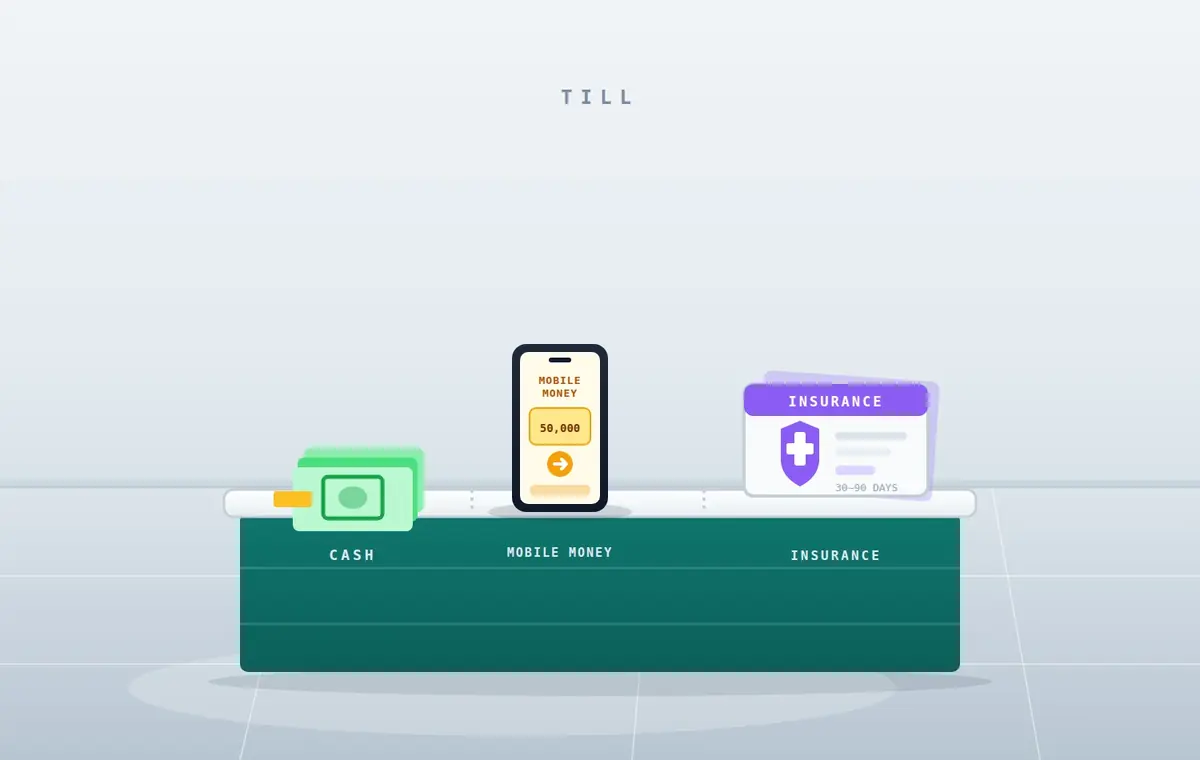
Channel onecash — instant, invisible, risky
Cash settles immediately and costs nothing in fees — but it leaves no trail of its own. Every shilling of it needs a receipt and a counted float to become real in your books. Cash without a daily reconcile is cash you are taking on faith.
And cash is the one channel your staff can make disappear. An uncounted drawer is not a convenience — it is an invitation. The day you stop counting is the day the drawer starts making its own decisions.
Channel twomobile money — convenient, reconcilable, not free
Mobile money gives every payment a digital trail — which is worth as much as the fee it costs. The discipline is matching statements to receipts weekly, not monthly, so that an unmatched transaction is found while it is still explainable.
The unmatched transaction you find in three days is a conversation. The one you find in three months is a mystery. Same transaction — the only difference is when you looked.
Channel threeinsurance and credit — volume now, paperwork forever
- Insurers bring patients — but pay in 30–90 days and dispute what is undocumented
- Clean claims get paid: complete, coded, submitted on time
- Watch your debtor days like a vital sign; rising receivables strangle a busy clinic
Insurance fills the diary with patients you would not otherwise see. But a claim that arrives incomplete comes back as a dispute — and money you counted in October lands in January with questions attached. The rule: a service you cannot document is a service the insurer will not pay for.
Right now — how much of last month’s revenue is still “expected” rather than received? If the answer surprises you, your mix is choosing itself.
The mix is a dial, not a decision
There is no universally right split. A walk-in-heavy practice can live on cash and mobile money; a clinic beside a big employer lives on insurance. Whatever your split, the discipline is the same: know each channel’s cost, watch the debtor days like a vital sign, and reconcile weekly. Rising receivables strangle a busy clinic quietly — the books say profitable while the drawer says empty.
A healthy mix for most small practices: enough cash and mobile money to fund the week, enough insurance to fill the diary — and a reconciling ritual that keeps all three honest.
Cash funds today. Mobile money funds the trail. Insurance fills the diary. A practice that knows what each channel costs — and watches the mix weekly — stops being surprised by its own money.
About the author

Joel Muwera
Founder, Ospito+ HMS
CEO, Nasa Healthcare & Surgery