Why Your Clinic Is Busy But You’re Still Broke

Your clinic sees forty patients a day. Forty. And at the end of the month, you’re borrowing money to pay rent. That’s not bad luck. That’s a leak. And I’m going to show you exactly where the water is going — including one reason almost no clinic owner in Uganda will admit out loud. Stay with me, because reason number four is the one that’s quietly killing you.
Reason oneyou’re pricing like a good person, not a business owner
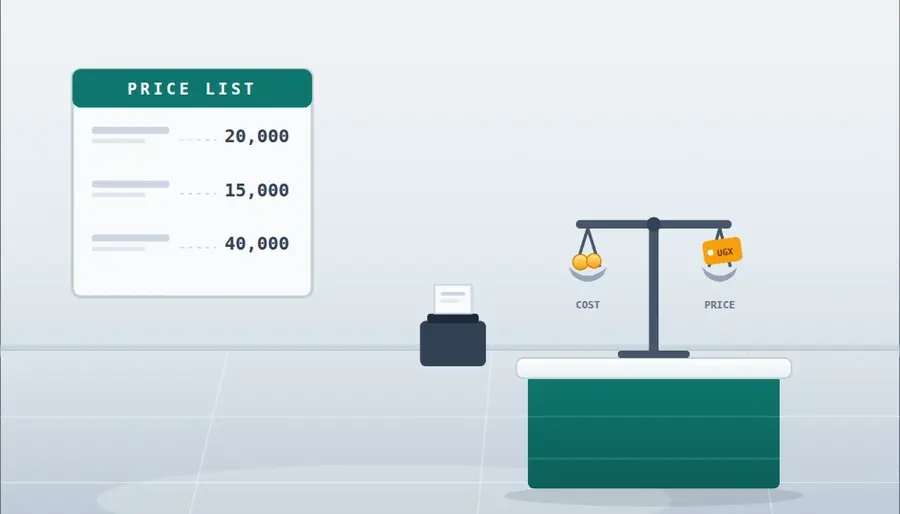
Most doctors get this completely wrong — they think cheap prices build loyalty. They don’t. They build disrespect. You charge five thousand for a consultation that should be twenty thousand, and the patient still complains it’s too much. You know why? Because price is a signal. When you’re cheap, the patient’s brain whispers — "maybe he’s not that good."
Look at your own price list right now — in your head. Is your consultation fee higher or lower than the pharmacy on the corner? Be honest.
And here’s the worst part — you can’t even defend your price, because you don’t actually know what that one patient cost you. The gloves, the cotton, the electricity, the nurse’s time for those twenty minutes — you swallowed all of it and called it "five thousand consultation". Find a way to know your true cost per patient — a spreadsheet, a calculator, or one of the many hospital management systems out there. You need to see that number before you can defend your price. Because a price you can’t defend is a price you’ll always lose.
Reason twothe kindness nobody is counting
A patient can’t pay. You treat them anyway — you’re a good person. Then she comes back. And brings her sister who also doesn’t pay. Kindness has a cost. And that cost is your children’s school fees. I’m not telling you to be cruel. I’m telling you that a clinic that closes because the doctor was too kind helps no one. Not even the patients.
And the worst part? You don’t even know how many patients you’re treating for free. There’s no record. No flag. No number staring at you at the end of the month saying "you gave away 1.2 million in free consultations this month". So it just keeps happening. Quietly. Every week. Start tracking who pays and who doesn’t. Every patient, every visit, every balance — logged. You’d be shocked how fast the "munyambe" visits dry up when there’s a record.
Reason threeyou don’t know your numbers
I guarantee this is happening in your clinic right now — you cannot tell me, to the nearest shilling, what it costs you to see one patient. The rent, the nurse’s salary, the gloves, the electricity, the water, the receptionist’s phone credit. If you don’t know your cost per patient, your price is a guess. And a guessed price is always guessed too low.
What’s your cost per patient? You have five seconds. …You don’t know. And that’s the problem.
You’re sitting with a calculator at midnight trying to figure out if you made a profit this week. By the time you finish, it’s next week. And the question is already stale. Your clinic should be telling you — daily — "today you made this, you spent this, this is what’s left". Not at the end of the month. Not at midnight. Today. If you have to dig for your own numbers, you’re already losing.
Reason fourthe one nobody talks about
Now — the reason I teased at the start. The one nobody talks about. Your staff is stealing from you. Maybe not with their hands. But with their time, their free drugs, their "I’ll just give this one to my friend" — and yes, sometimes with the cash itself. I know. You trust your nurse. She’s been with you three years. She’s family. That’s exactly why you’ve never checked. And that’s exactly why it continues.
Every drug that leaves your shelf — who took it? Who paid? Who was it for? You don’t know. And the reason you don’t know is not because your staff is bad. It’s because there’s nothing recording it. Trust without records is how clinics go under. You don’t need to stand over your staff with a stick. You need every drug, every dispense, every payment to leave a footprint. The moment your staff knows everything is logged, the "I’ll just give this one to my friend" stops. Not because you caught them — because they know they can’t get away with it anymore.
Reason fivebusyness is a mask
This might surprise you — your busy clinic is actually hiding how broke you are. Busyness is a mask. Forty patients a day feels like success, so you never stop to ask the dangerous question: "After all these patients, where did the money go?" You feel productive. The bank account feels empty. And the gap between those two feelings is where your clinic is dying.
When was the last time you sat down — not to see patients, not to order drugs — but just to look at your money? Just the money.
If you can’t see your daily revenue, your daily costs, and your daily profit in one glance — today, right now, this minute — then you’re not running a business. You’re running on hope. And hope has never paid a nurse’s salary.
Reason sixyou’re selling the wrong thing
You’re selling consultations. One-time, five-thousand-shilling consultations. The clinic down the road that looks quieter than yours? They’re selling chronic care packages. Diabetes management, hypertension follow-up, antenatal — monthly. Recurring. Predictable. You’re chasing forty new patients a day. They need twelve patients who come back every month. Guess who sleeps better.
But here’s why you’re not doing it — tracking twelve patients across monthly visits, their payments, their next appointment, their lab results… that’s a nightmare on paper. So you don’t do it. And you keep selling one-time consultations that keep you broke. There are hospital management systems that handle this for you — patient subscriptions, recurring billing, next-visit reminders — all automated. You set it up once, and your chronic patients manage themselves. You just treat them.
Reason sevenyou have no follow-up
A patient comes once, you treat them, they leave, and you forget they exist. Most doctors get this completely wrong — they think "if I did a good job, they’ll come back". They won’t. Not because you’re bad. Because they’re busy, they forgot, and no one reminded them. A patient who doesn’t come back is a patient your competitor just acquired for free.
How many of yesterday’s patients can you name without looking at your register? If you can’t name them, you can’t keep them.
Your brain is not a filing cabinet. And every patient you forget is money walking out the door and into someone else’s clinic. Find a way to remind them before they forget you. A text, a call, a notification — something that says "doctor, this patient is due for review in three days". Because the clinic that remembers wins. Every time.
Reason eightnobody is counting your shelves
You don’t know what’s expiring, what’s walking out the back door. A box of amoxicillin expires on your shelf — that’s money in the bin. Coartem runs out on a Friday and you lose the whole weekend’s malaria patients to the clinic next door. You’re not just losing drugs. You’re losing patients, money, and trust — all because nobody is counting what’s on your shelves.
Right now — how many boxes of paracetamol do you have? Not "around". The exact number. …You don’t know. And that not-knowing is costing you more than any patient ever will.
You need to find a way of knowing your stock valuation with ease — what’s coming in, what’s going out, what’s near expiry, what needs reordering. And there’s nothing quicker and more reliable than putting one of the many hospital management systems into your clinic. It counts for you, it warns you before you run out, it flags the drugs that are about to expire. Because a clinic that doesn’t know what’s on its shelves is a clinic that’s bleeding from a wound it can’t even see.
The fix: stop running your clinic from your head
Now — the payoff I promised. You came here because you’re busy and broke. Eight leaks. Here’s the truth that ties all of them together. Every single leak I just named — the bad pricing, the free treatment, the stolen drugs, the expired stock, the patients who never come back — they all have one root cause. You are running your clinic from your head. And your head is not built for this. No one’s is.
I stopped doing it. And the day I stopped, my clinic started running itself. I’m not going to tell you exactly how — that’s a story for another article. But I’ll tell you this: the day you stop carrying your whole clinic in your head is the day your clinic starts making money.
You’re not broke because you’re a bad doctor. You’re broke because you’re carrying a whole hospital in your head — and your head was never built to hold a hospital. Put it down. The patients will still come. They always do.
About the author

Joel Muwera
Founder, Ospito+ HMS
CEO, Nasa Healthcare & Surgery