A weekly rhythm that prevents stock-outs and expired drugs

Every clinic knows both failures: the antibiotic you ran out of on Friday, and the box of expiring stock discovered in March. They look like opposite problems — too little and too much — but they have the same root: no rhythm. Stock does not need heroics. It needs thirty minutes, weekly, same day, same person.
The chaos version you already know: someone notices the shelf is empty, someone runs to the market, someone pays retail plus a boda, and the drugs arrive after the patients have left. That is not inventory management. That is panic with extra steps.
Rhythm onecount by movement, not by shelf
A full stock-take is a once-a-quarter exercise. Weekly, only count what moves: your top twenty to thirty items by volume. These are the lines that stock-out fastest and hurt most when they do.
The slow movers can wait for the quarterly count. The fast movers — your paracetamol, your Coartem, your amoxicillin, your ORS — those twenty or thirty lines are where every stock-out and every patient who walked to the next clinic lives. A stock-out is rarely bad luck. It is a count that did not happen two weeks ago.
Rhythm twoset a reorder level, not a reorder feeling
For each fast-moving item, the reorder point is simple: how much you use between placing an order and receiving it, plus a small buffer. When stock hits that level, ordering happens — not when the shelf looks empty, and not when someone remembers at the market.
“We are running low” is a feeling. “We have three days of stock at current movement” is a number. Run your ordering on the number — because the feeling always fires a week too late.
Rhythm threepull expiry forward — FEFO on the shelf
- Dispense First-Expiry-First-Out: shortest-dated stock goes to the front
- Flag anything inside 90 days each week and push it to the top of dispensing
- Return or discount near-expiry stock before it becomes a write-off
The box expiring in March that you discover in March is already a loss. The box expiring in March that you flag in January is a decision — discount it, return it, or push it to the front of dispensing. Expiry is only a surprise when nobody is looking at dates weekly.
Rhythm fourlet discrepancies surface early
When physical counts diverge from recorded counts every week, you find the problem while it is still small — a dispensing entry missed, a delivery short, a pattern that needs a conversation. Quarterly discovery turns the same problems into losses you simply absorb.
The rhythm in one sentence: count the movers, order at the level, sell the oldest first. Thirty minutes, same time every week, same person accountable.
Who owns the thirty minutes
A rhythm without an owner is a wish. Same person, same day, same time — and their name on the sheet. The week nobody counts is the week the leak starts. Keep it boring: boring is sustainable, and sustainable is what keeps the shelf full.
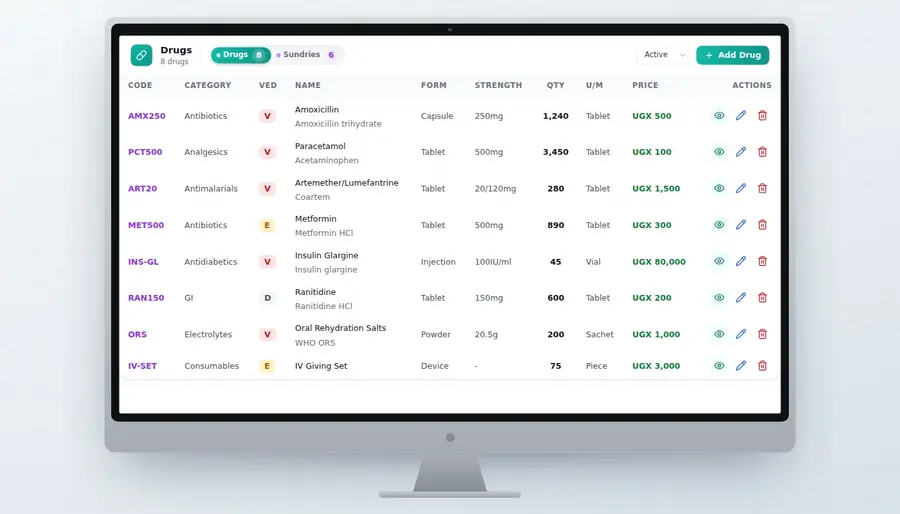
And when the numbers live in a system — stock levels, expiry dates, movement — the thirty minutes becomes ten, because the counting is already done. You are only reviewing. That is the difference between doing inventory and having it.
Stock discipline is unglamorous, but it is the difference between a pharmacy that funds the practice and a pharmacy that quietly eats it — one expired box at a time.
About the author

Joel Muwera
Founder, Ospito+ HMS
CEO, Nasa Healthcare & Surgery