How to Choose the Right Clinic for Your Family in Uganda

You wouldn’t buy a phone without checking the specs. You wouldn’t rent a house without inspecting it. But you are trusting your family’s health — your children, your wife, your parents — to a clinic you’ve never evaluated. You just walked in because it was near. That decision could be the difference between a quick recovery and a misdiagnosis that costs you millions — or worse. By the end of this article, you will know exactly how to evaluate any clinic in Uganda in under five minutes — without being a doctor. And stay with me, because the last sign is the one almost nobody checks — and it’s the most important one of all.
Sign onethe first five seconds at the door
Most people get this completely wrong — they judge a clinic by the signboard. Big sign, nice paint, "medical centre" in bold letters. That tells you nothing. The signboard is advertising. You want evidence. Walk in. What do you smell? A clinic should smell clean — not like perfume, not like air freshener covering something. Clean. What do you see on the floor? Is it swept? Is there dust in the corners? Are the seats wiped down or are there stains from the last patient? The clinic that cannot keep its waiting room clean is the clinic that cannot keep its instruments clean. And you don’t need a medical degree to see that. You need a nose and two eyes.
Think about the last clinic you visited. What did it smell like when you walked in? If you can’t remember — you weren’t paying attention. And that’s the problem.
Sign twohow they treat you before they know why you’re there
You walk in. The receptionist looks up. Does she greet you? Does she ask how she can help? Or does she stare, go back to her phone, and make you stand there like you’re begging? That thirty-second interaction tells you everything about how the clinic sees patients. If you’re an interruption before they know what you need — you’ll be an interruption after they find out. The clinic that values you as a person before they know your problem is the clinic that will value you as a patient after they diagnose it.
The receptionist is not just a receptionist. She is the clinic’s first impression. And first impressions in healthcare can save your life — or end it.
Sign threeyour records
I guarantee you’ve never thought about this — but it’s critical. When you visit a clinic for the first time, do they create a file for you? Do they ask about your history — allergies, chronic conditions, previous surgeries, medications you’re taking? Or do they just see you, prescribe something, and send you home? A clinic that doesn’t record your history is a clinic that’s guessing. And guessing in medicine kills people.
Does your current clinic know your blood type? Your allergies? The last medicine you took? If they don’t — they’re not managing your health. They’re managing your symptoms. And symptoms come back. Health doesn’t.
A good clinic creates a proper patient file — your history, your visits, your medications, your lab results — all in one place. So when you come back in six months, they don’t ask "what were you treated for, last time?" They already know. Because your health is not a series of random visits. It is a story. And a clinic that doesn’t know your story is a clinic that cannot write the next chapter safely.
Sign fourthe receipt
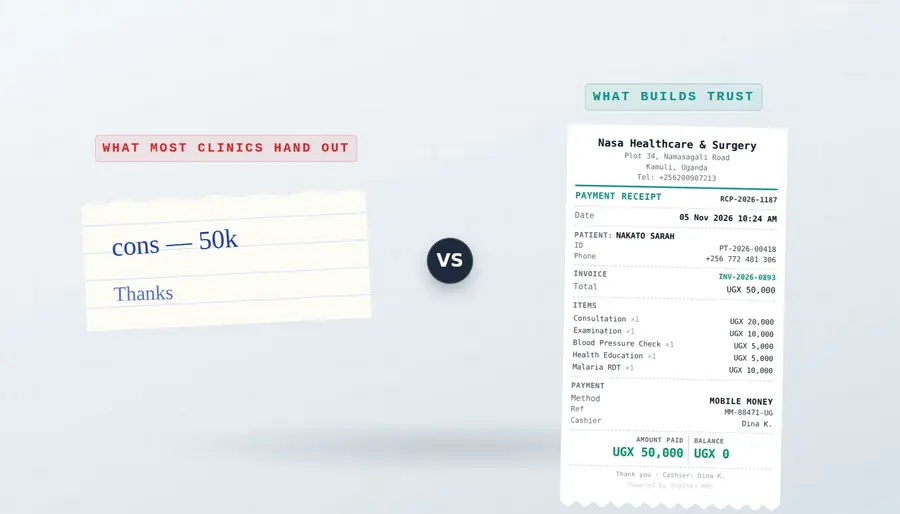
Now — the sign nobody checks. The receipt. I know what you’re thinking — "who checks the receipt at a clinic?" You should. Because the receipt tells you whether this clinic is organized or chaotic. A proper receipt has the clinic name, what you were treated for, what you paid for, and how you paid. A scrap of paper with "cons — 30k" tells you this clinic has no system. No records. No accountability. And if they cannot organize a receipt — can you trust them to organize your treatment?
Here is the truth — the clinic that hands you a proper, printed, itemized receipt is the clinic that takes itself seriously. And a clinic that takes itself seriously takes your health seriously. The receipt is not about the money. It is about the standard.
Sign fivethe doctor’s questions
This might surprise you — a good doctor asks more questions than they give answers. How long have you had this? Did it start suddenly or gradually? Have you taken anything for it already? Does anyone in your family have a similar condition? What’s your diet like? Are you sleeping? A doctor who asks three questions and prescribes is guessing. And malaria, typhoid, and brucellosis all look the same in the first forty-eight hours — guessing is dangerous.
At your last clinic visit — did the doctor ask you more questions, or did they talk more? If they talked more than they listened — you were not diagnosed. You were processed.
Sign sixfollow-up
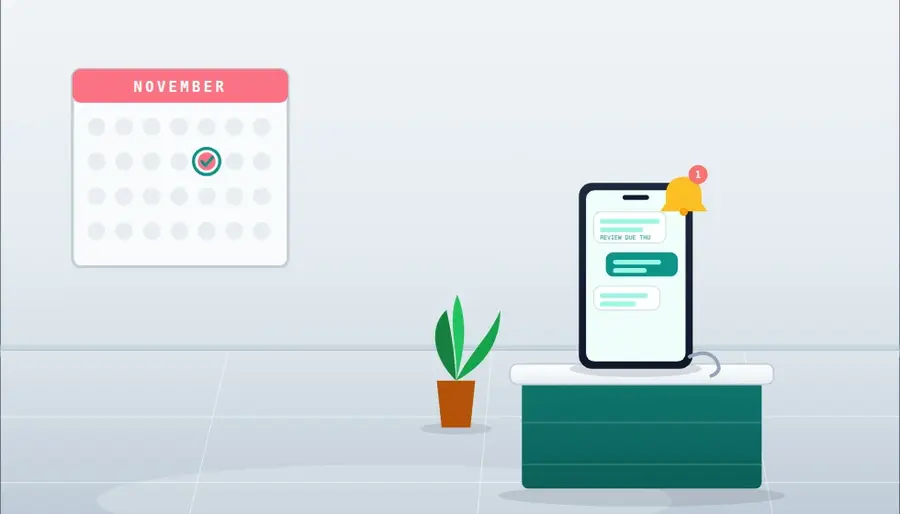
This one is sneaky. Follow-up. You visit the clinic, get treated, go home. Three days later — does anyone call? Does anyone send a message asking "how are you feeling?" "Did the medication work?" "Do you need to come back?" If the answer is no — this clinic sees you as a transaction, not a patient. The clinic that follows up is the clinic that cares about the outcome, not just the payment. And in healthcare, the outcome is everything. A clinic that doesn’t follow up is a clinic that doesn’t know if their treatment worked — and doesn’t care to find out.
Has any clinic in Uganda ever called you after a visit to check on you? If not — you’ve never been to a good clinic. You’ve been to a busy one. And busy is not the same as good.
Sign sevenreferrals
The one that almost nobody in Uganda thinks about. Referrals. What happens when the clinic cannot handle your case? Do they tell you honestly — "this is beyond us, you need to go to Mulago or a specialist"? Or do they keep treating you, prescribing more drugs, running more tests, hoping something works — because referring you means losing your money? A good clinic refers you when they should. A bad clinic keeps you because they cannot afford to let you go. And the difference between those two clinics could be the difference between a treatable condition and a tragedy.
The 30-second test
Now — the payoff I promised. How to evaluate any clinic in Uganda in under five minutes. Walk in. Smell. Look. Listen. Three senses. Thirty seconds. If it smells clean, looks organized, and the first person who speaks to you treats you like a human — you’re in a good clinic. If any of these three fail — walk out. Don’t wait for the doctor. Don’t wait for the consultation. Walk out. Because the clinic that fails the thirty-second test will fail you when it matters most.
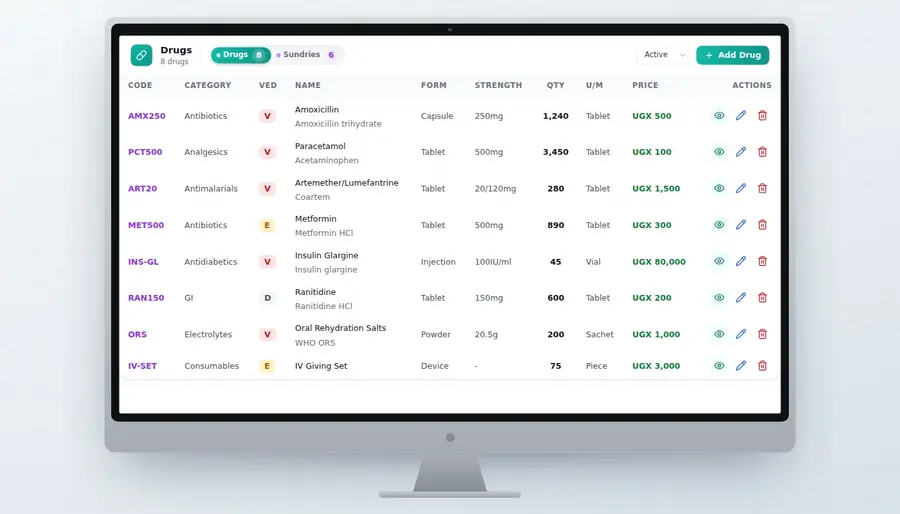
Printed receipts, stocked drugs, follow-up calls, transparent pricing, and honest referrals — that is a clinic with systems. The clinic without these things is a clinic running on memory, on chaos, on luck. And luck is not something you want managing your family’s health.
Your family’s health is not something you leave to chance — or to proximity. The nearest clinic is not always the best clinic. The cheapest clinic is not always the smartest clinic. The busy clinic is not always the good clinic. Evaluate. Smell. Look. Listen. Ask for records. Check the receipt. Wait for the follow-up. Because the clinic that passes these tests is the clinic that will be there when your family needs them most — not just when they’re well enough to walk in.
About the author

Joel Muwera
Founder, Ospito+ HMS
CEO, Nasa Healthcare & Surgery